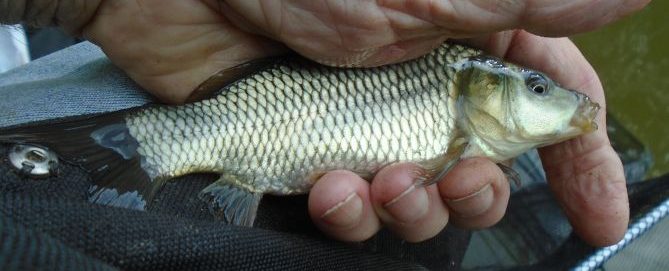
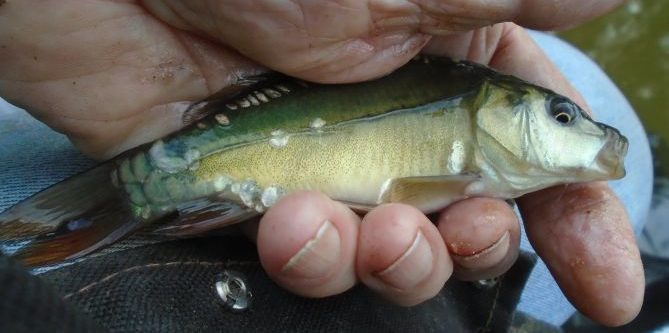
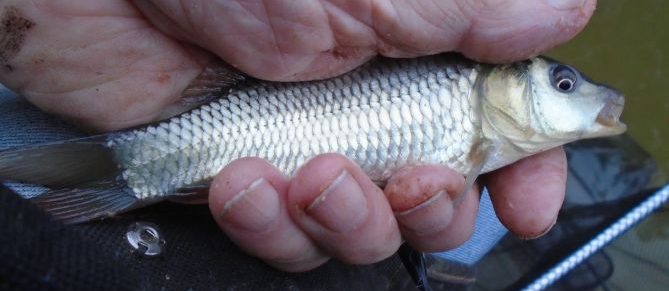
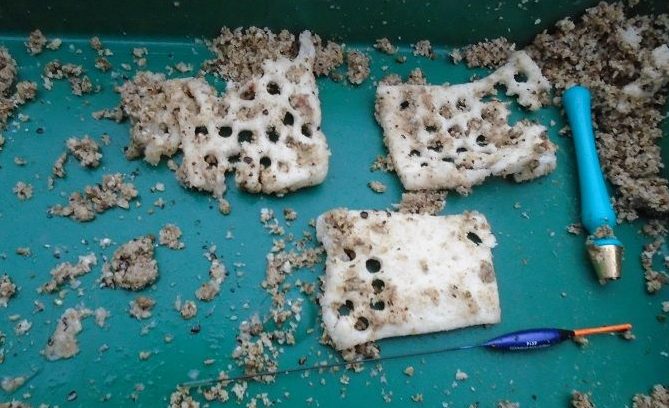
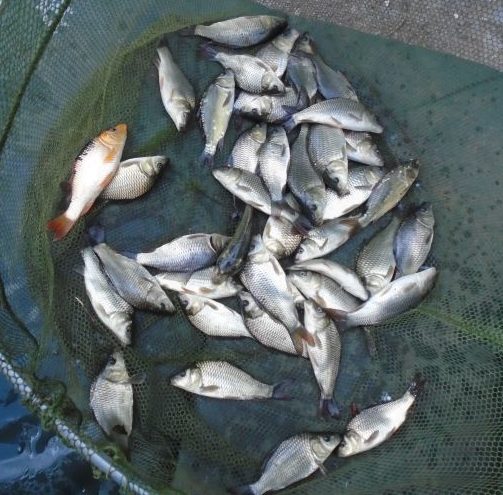
Allsmoor common carp queue up for the bread punch on the pole

September 26, 2026 at 9:33 pm

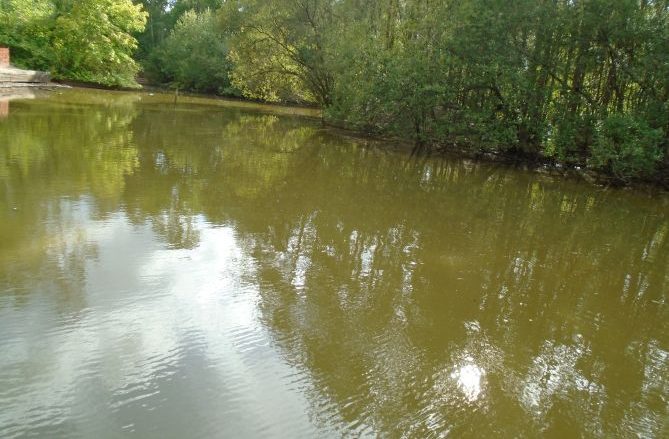
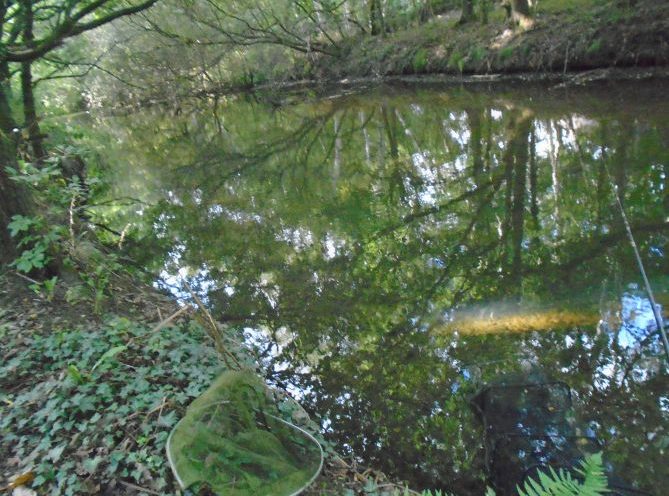
My last visit to Allsmoor Pond was during the July heatwave, but now enjoying an Indian Summer in late September, I paid an afternoon visit for a few hours fishing, while my wife was preparing a fish pie for our evening meal. I was suprised to see that bull rushes now choke two thirds of the pond, leaving only one end fishable from half a dozen swims. Reaching my intended swim, I found it filled with large logs, which could not have been an accident and can only assume that the anti fishing brigade are responsible. I backtracked a few yards to the only other swim on that side and saw that this too had a sunken log a few yards out from the bank. This must have been a two man job, as this was a big log. Oh well, live and let live, is my motto.
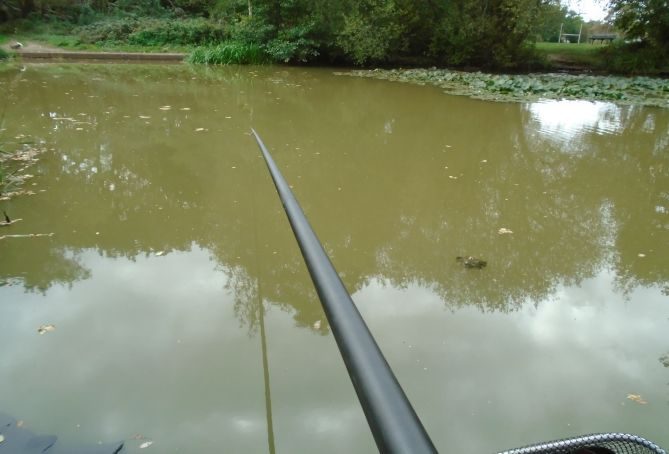
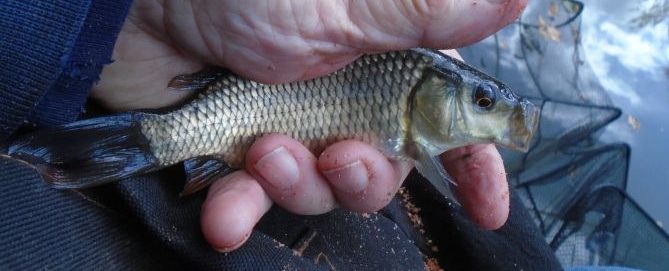
Fishing the pole in this swim did not cause me any problems and I continued setting up, although later in the afternoon, I did hook the snag and pulled twig free. I mixed up the usual liquidised bread, ground hempseed and strawberry flavoured groundbait, which I formed into small balls and catapulted half a dozen, eleven metres out. Setting up with a 4 x 16 antenna float rig to a size 14 hook with an 8 mm punch of bread. First cast over my groundbait, the float slid away and the elastic stretched out toward the lily bed. Raising the pole, the run was stopped and the fish turned left and rolled on the surface. This was the signal for me to begin pulling the pole back to the top three sections, while the elastic stretched out further, putting the now visible common carp under more strain, The carp was soon on the surface, sliding toward my landing net.
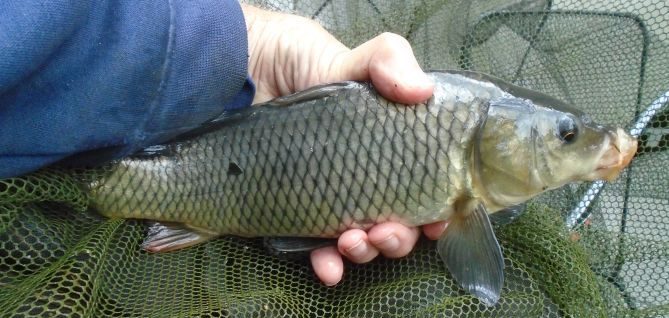
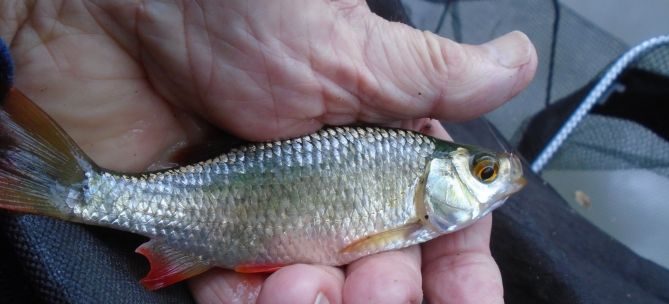
This was a good start and I punched out another 8 mm bread pellet, slid it onto the hook and cast back out. The float slid away again, brace and lift. A small rudd splashed on the surface. This was quickly drawn back and unhooked.
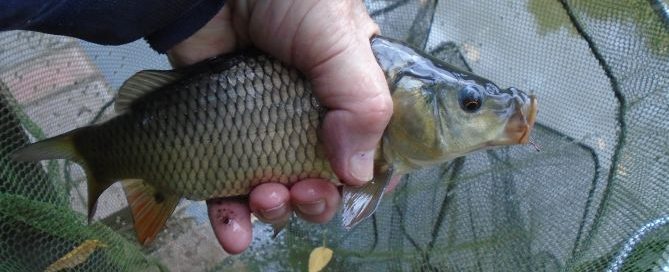
A couple more balls of feed were catapulted out, followed by a cast into the area. The float settled and lifted, then disappeared in a flash and I was in again. This one briefly running, then stopping to fight, rolling and diving like a crucian carp. I let the fight continue, until the fish made another run and I again broke the pole down to the top three, this resulting in a fight back, before the fish gave up and came to the landing net. Not a crucian, just an angry common.
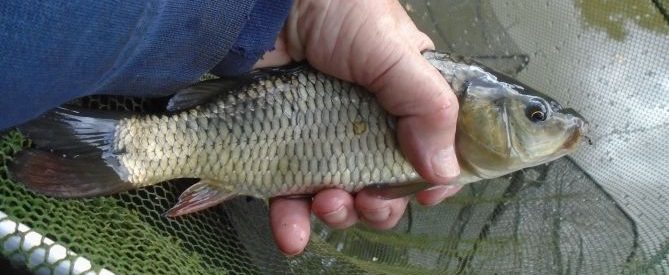
Another small rudd was swung in, then the elastic was out again, with another running common. This one made a sudden bid for freedom by diving to my left, out of sight behind the reed bed, needing extra pressure to bring it back round to be netted.
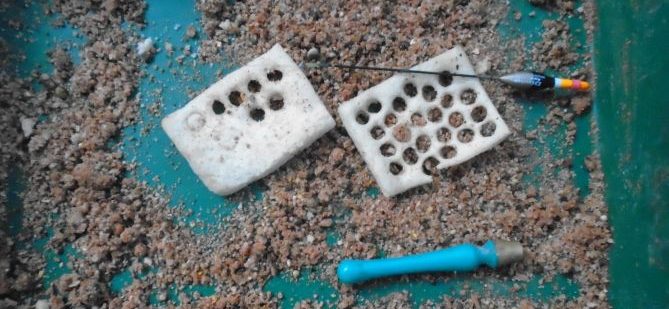
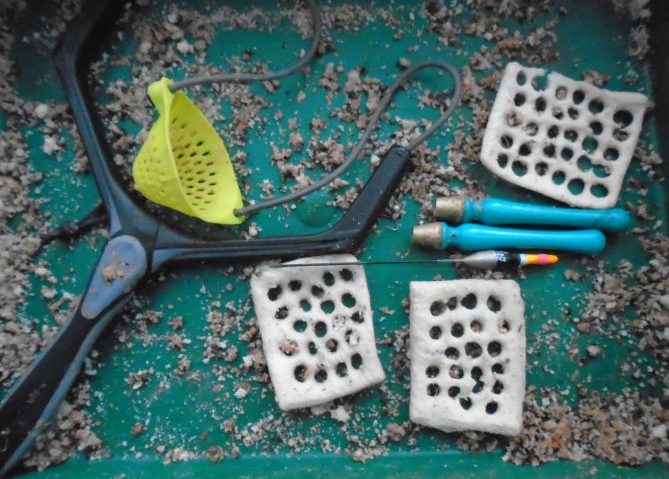
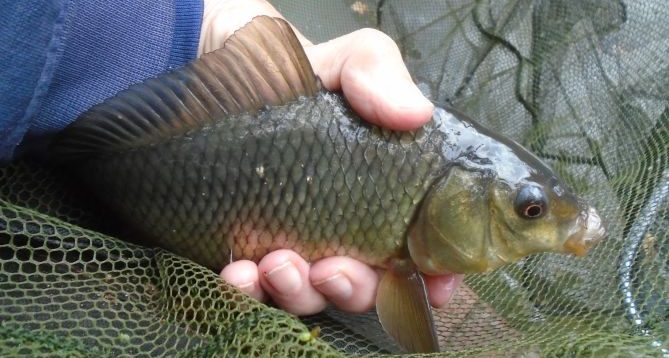
I had now attracted the attention of an angler on the opposite bank, who came round for a chat about my bread punch method, only to find me playing yet another carp, this one a very deep fish, that I thought was a crucian. Wishful thinking I think, as crucians often made up 50% of my catch in the autumn. I do miss catching crucians. This angler wanted to know what I was doing to catch so many carp, while he had none. I showed him my punches and floats, plus my ground bait mix. He was using an eight foot spinning rod, with large pieces of bread flake pinched on a size 10 hook. He was casting with a bubble float to the edge of the lily bed. Nothing wrong with that, but he was leaving the bread to be discovered by a roving carp. I was fishing light, using the pole to drop the float over the groundbaited area, then having a direct strike to the float, the fish having been attracted into the swim. I suggested that he mash up some of his bread and throw it to the edge of the lilies, or just throw in a few free samples. While he was there I unhooked the carp that I was playing, when he arrived.
I demonstrated how the bread punch works, fitted the pellet to the hook, cast out and hooked a small common straight away. He was amazed. It is not magic, just a combination of doing the right thing to catch fish.
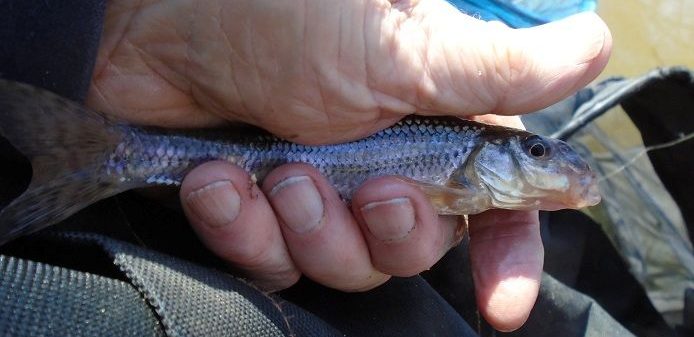
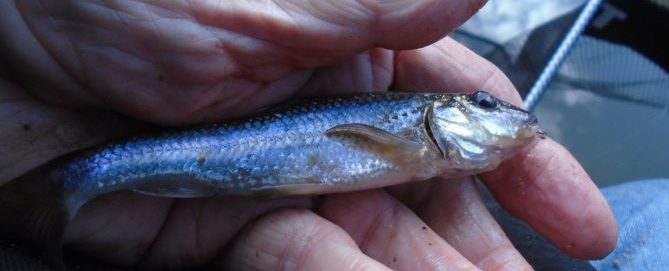
A cold wind was now getting up, blowing through the gap in the trees and I had to add another few inches to the depth to hold bottom. I had been fishing just off bottom and this may have been why I began catching gudgeon. I say catching gudgeon, but most of them came off the hook.
The angler on the far side finally hooked a carp, a mirror of about two pounds, which his young son managed to net for him. I was pleased to see this father and son action, with photos for the albumn taken by a walker.

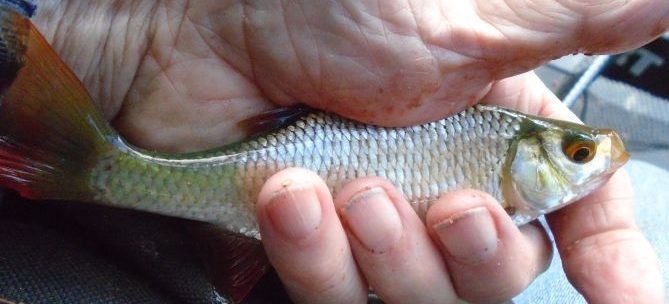
It was getting close to 6 pm, time for me to get home to the fish pie,  that my wife was making. I had been systematicly catapulting my remaining groundbait out in an attempt to bring the carp back on the feed. A better than average rudd was a false alarm, but good to see.
Piling in the feed finally paid off at last, with bubbles bursting on the surface and the hope of a nice carp to round off the afternoon. The float steadily moved to the right and sank, with solid resistance, that exploded into action.
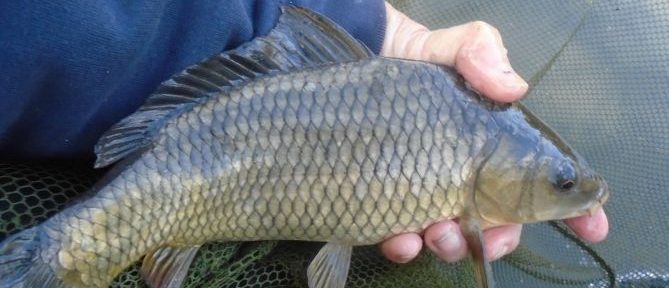
This took me all over the pond, testing the elastic to the extreme, but the hook held and it stayed on for the landing net. The carp were probably coming back on and I was tempted to make one more cast.
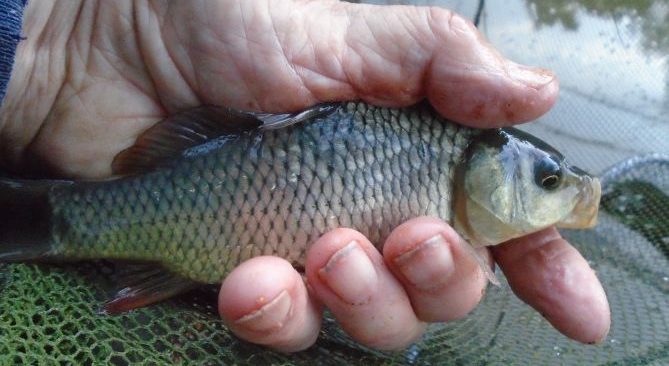
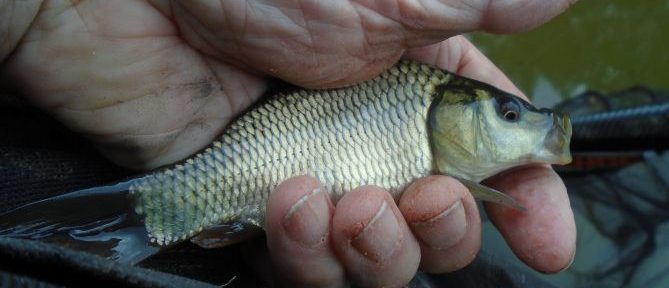
They were definitly back in the swim, as this young common proved, but time was marching on and although reluctant, I began packing up, as my fish pie was waiting.
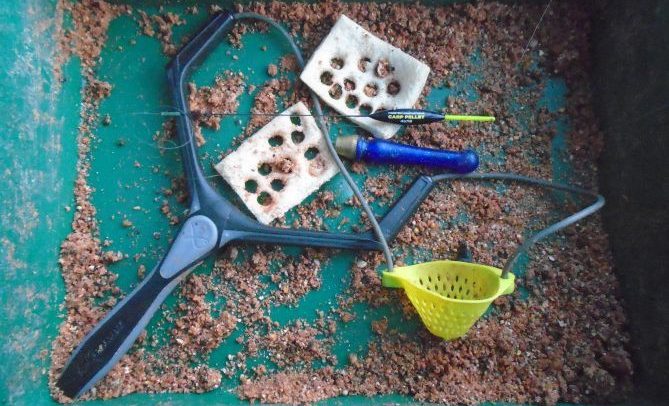
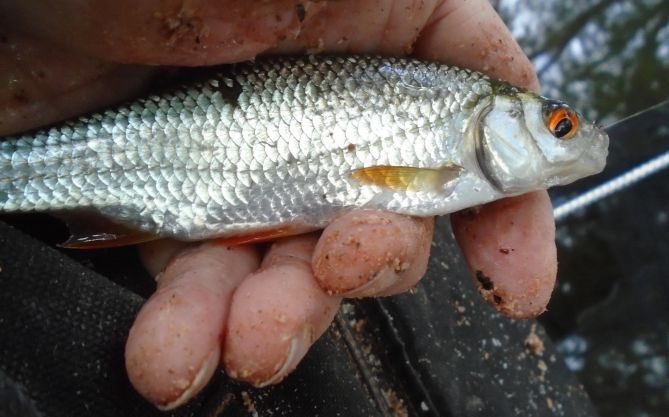
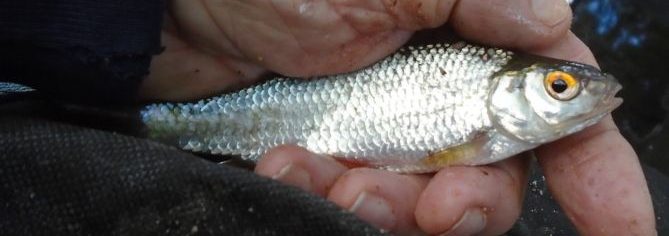
Decent roach usually appear at Allsmoor and even the rudd were scarce this year, still I’m not complaining, the bread punch again proved to be the bait to beat for the carp.


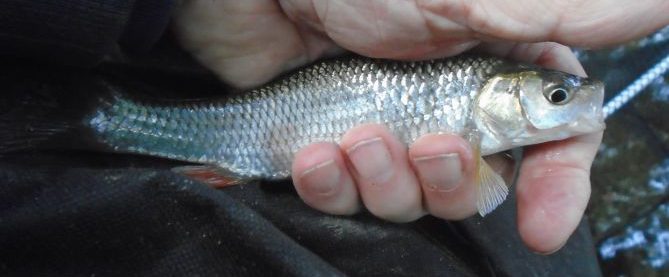
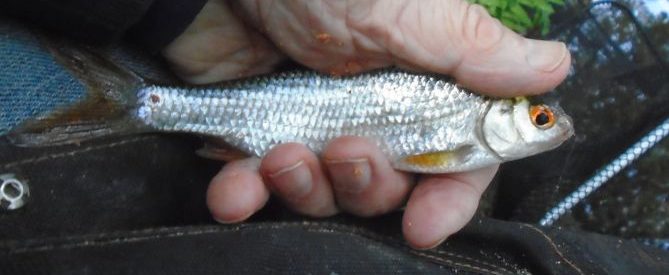
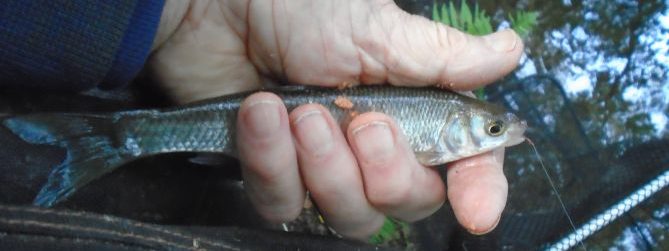
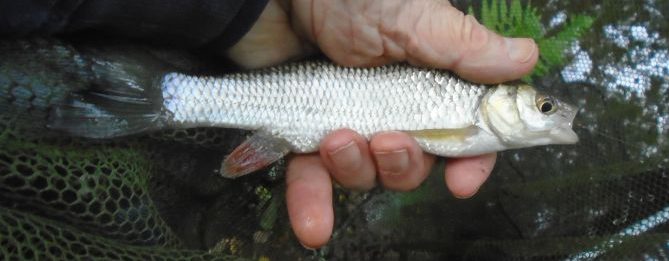
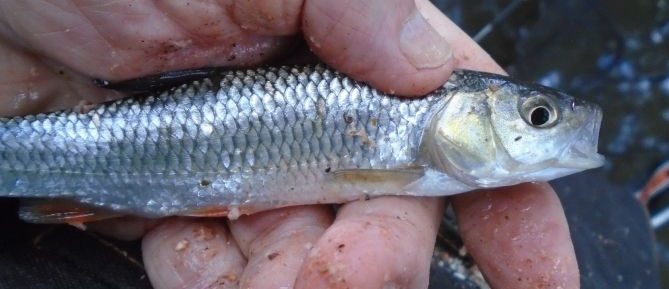
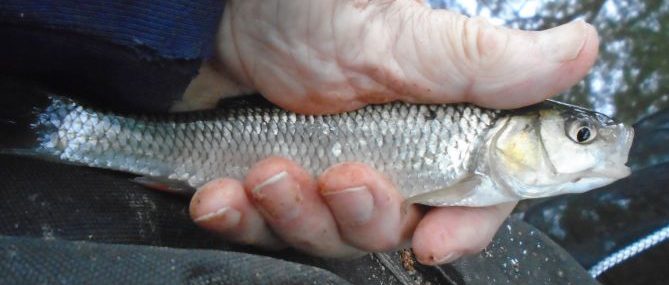
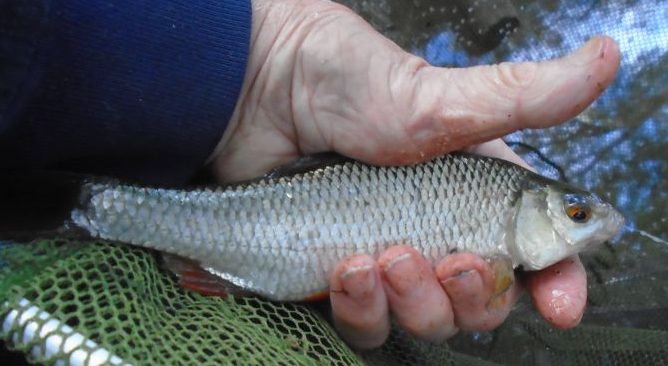
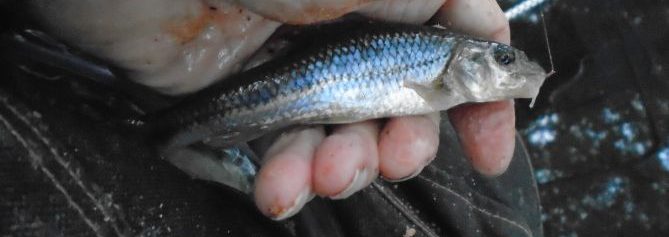
Low and clear River Blackwater gives up chub and dace to the stick float and bread punch.

September 18, 2026 at 5:46 pm

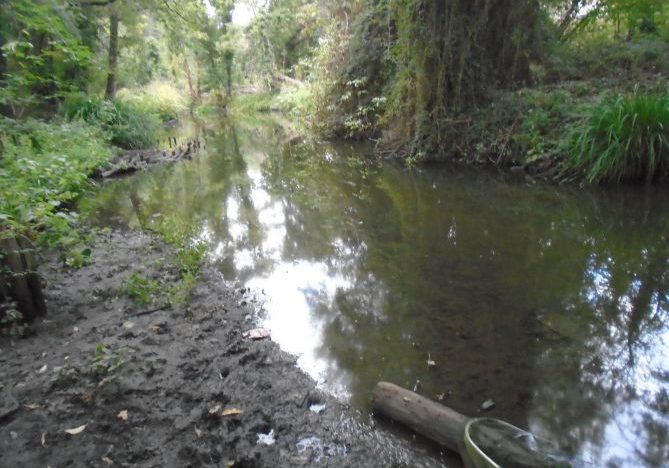
I was determined to get to the Farnborough DAS stretch of the River Blackwater this week, after a two vehicle crash had blocked the road at my last attempt, causing me to divert to my local river Cut. The roads were clear this time and I was parked up 20 minutes later, looking over the bridge at a river desperate for rain. I have never seen the water so clear and shallow and dismissed my intended downstream swim and began a search upstream for something deeper, with enough room to cast and trot a stickfloat. As I walked, I realised that my options were limited, stopping to check every 50 yards, eventually finding a spot that I have fished before, which used to have a foot of water straight off the bank, but now was bare gravel. Tackling up, I was amused to see a trio of mallard ducks giving up trying to swim upstream, instead walking along the exposed gravel on the opposite bank!

I set up with a 2 No 4 pole float, with No 8 shot down the line to a size 14 fine wire barbless hook, overdepth at 2 feet. Being on the outside of a bend, there was good flow and I balled in a mix of ground hempseed, liquidised bread and pink strawberry groundbait. Sitting well back from the bank, I could see the balls break up into a cloud of particles and first drop in, the float dived away upstream with a hard fighting chublet rushing away on the short line. I had to take care swinging it in, as the 12 foot Hardy rattled through the branches above.

Much smaller chublets pulled the float under, as I held back lifting the 7 mm punch of bread clear of the bottom, some fish hooking themselves. The strong downstream wind was no help either, blowing the smaller fish away from my outstretched hand, while trying to avoid the branches overhead.

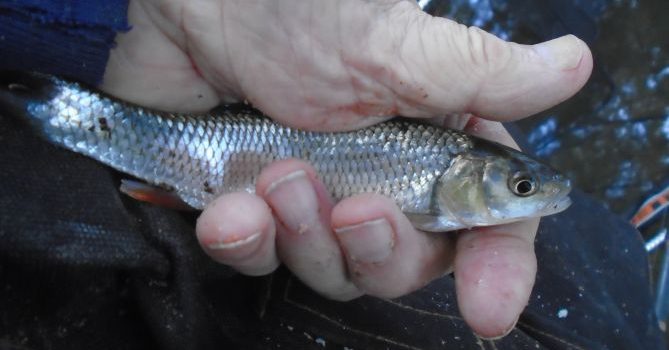
The next fish of note was a roach, which swam then turned in quick succession, giving that classic thumping fight. Roach filled this swim the last time that I fished it in the winter, but they were missing today.

Dace now came into the swim, giving lightning fast bobs of the float, that often stripped the soft punched bread from the hook. Increasing the tail and depth, while holding back intermittantly, seemed to get more in the net, the soft top of my Hardy float rod, resisting their explosive tumbling fight.

The sun was beginning to set and seeing my float in the shadows was more difficult, often the ripple created, when the float sank being the only sign of a bite. The line jerking forward was too late for the dace, that were long gone with the bait. The chub were braver and held onto the bait for longer.

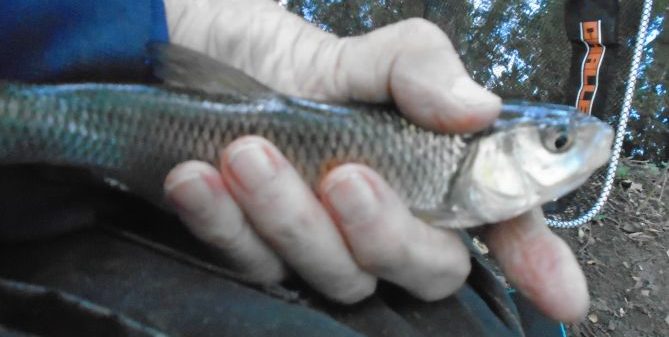
I had increased the feed rate and the chub had responded, most giving a brief fight when hooked, but a firm take twenty yards down the trot was a different matter, with a decent chub jumping clear of the surface, when the lightweight rod bent into it. Being so shallow, there was nowhere to go for this chub, but to run downstream and I took my fingers off the handle of my ABU 501 to let it freewheel, with the Hardy taking the shocks. It was only seconds, but seemed longer, when the chub turned and began swimming back under load, with bursts of energy, while searching the bottom for snags. I could not raise the rod for fear of becoming caught in the oak leaves above my head, but the white gaping mouth of the chub was on the surface and soon guided to the landing net.

Apologies for the blurred image of this chub, but my tired old camera struggles in low light under trees.

I had expected to fish for longer, but finding a suitable swim had taken precious fishing time, however my short two hour session had been productive in the end, while the bread punch continues to be an effective way to catch a wide variety of fish.


Pollution, fails to affect one a chuck fishing with the bread punch on the River Cut

September 13, 2026 at 12:47 am

I was geared up for my first visit of the season, to the Farnborough DAS stretch of the River Blackwater at Camberly this week, now that Autumnal temperatures are the norm and following reports of roach and bream bags being taken on the bread punch. My enthusiasm evaporated at the top of my road, where it crosses a dual carraigeway at traffic lights, when I joined a queue of traffic waiting to cross. My side was slowly moving forwards, a few cars at a time. Drawing closer, I could see the blue flashing lights of police cars, while traffic on my side wishing to cross the lights, were being directed to the right away from the junction, back into the town. As the normal function of the lights was allowing traffic each way along the carraigeway, it took sometime for me to reach my turning point, seeing that a large van had hit an estate car in the rear, blocking progress across, while bollards restricted those cars turning right and across to follow left. At the next lights was another queue. This was mid Friday afternoon, when traffic is usually heavy, and knowing the diversion route would be clogged, I abandoned the Blackwater idea and cut through the centre of the town and headed for the Cut at Jocks Lane.

Parking the car, I loaded up my trolley and headed for the river, seeing that it was still low, despite rain earlier in the week. The oil barriers are now a permanent fixture at the weir, which was passing a scummy trickle over the sill into the slow moving river. I continued down to the disabled platform and saw that the level was right down again, with exposed mud and the bottom visible across to the opposite bank. Being on the inside of the bend, there was no flow and a film of scum was static over the shallows, with a pervading smell of oil.

Thames Water are obviously extracting more water from the Cut, recently a multi gallon tank was sunk into the ground, attached by a pipe to the outfall tunnel above the weir, having a direct link to the water treatment works a mile downstream. At the time, Thames engineers said that this was to avoid flooding of the river, but the water passing over the weir sill is now always a trickle, even in times of high flows on the main river. With thousands of new houses on estates springing up all around the local area, the water has to come from somewhere?

The days of using 5 No 4 bodied ali stemmed stick floats on this river are long gone, my new float of choice being a pole float carrying the equivalent of 2 No 4. A single No 6 under the float with three No 8 shot shirt buttoned down the line to the size 14 barbless hook. The old river depth here was three feet, with the float trotted down and held back in the flow, but now there is only two feet of depth with minimal flow. This week I was casting downstream to the deeper water, to avoid being seen by the fish, while the float was shotted with the fine tip just above the surface film. Bites were usually a couple of bobs before the tip disapeared, followed by the greased line, when I struck. Feeding was by catapult, at intervals firing small balls of strawberry flavoured liquidised bread, mixed half and half with ground hempseed. My first cast produced a runaway bite from a hard fighting chublet, that put a good bend in my 12 foot Hardy match rod.

A few gudgeon followed, before the steady thump, thump was felt from a small roach, that took the 7 mm punch of bread.

Some of the gudgeon were of a good size, fighting well above their weight on this fine tackle.

Among the gudgeon, the silver fish were keeping me interested, another small roach taking at range, followed next cast by a chublet.

Steady feeding brought a gudgeon a chuck, along with a better chub that took the bread on the drop, seconds after the cast, then running downstream needing a backwind from my ABU 501, requiring the landing net for the first time that afternoon. Not a big fish, but it certainly gave me a run for my money.

I was beginning to get a few better fish, when a young couple walked down the disabled platform and peered over the rail looking for fish, saying that they had been watching me catching fish, making it look easy, but now couldn’t see any. As politely as possible, I informed them I had purpously sat ten yards upstream to avoid scaring the fish in the clear water and suggested that they stand behind me, if they wanted to see some fish.

I fed some more groundbait with the catapult and cast downstream, the float disappeared and I struck into the best fish of the afternoon, a good roach, that was visible from the moment that it was hooked, ziz zagging from side to side, until I netted it, saying that they had brought me luck. They were impressed! There you are, making it look easy again!

The couple thanked me for the demonstration and continued downstream, which coinsided with the arrival of some noisy teenagers with a ball, which soon found its way into the river upstream. One of the lads soon had his shoes off and waded into the FREEZING water, hollering at the top of his voice about the cold. A game of kick about football was soon taking place on the green above my swim and the ball was back in the river. This is a public recreation ground and open to all and I decided to call it a day after two and a half hours of fishing. Beggars can’t be chosers.

My last fish, another fat gudgeon

A sign of a busy afternoon in Gudgeon Alley


Much needed rain improves prospects at Savernake Lake.

September 4, 2026 at 8:14 pm

At last the weather is changing from non-stop heatwave, to a more tolerable temperate climate, where in the South of England, we have even experienced moderate rainfall. No thunder storms and flash floods, as predicted by the technically aided weathermen, but moderate rain. Not too far in the distant past, the weather was predicted using a lump of seaweed and a piece of wet string. At least then, we did not expect too much from our weathermen. Many people still remember the now notorious BBC forecaster Michael Fish, who in 1987, jokingly referred to a viewer’s concerns of a Hurrican approaching the British shores as wrong, answering ” Well if you are watching, don’t worry there isn’t.” that reply did not go down well in the UK, after 115 mph winds caused devastation, hundreds of thousands of homes without power and 18 people killed. So it was this week, that after a wet afternoon was forecast, a hot dry afternoon followed.

Having completed my outside jobs in the morning, I was now at a loose end in the afternoon. I only had time for a couple of hours of fishing and took five minutes to drive to my nearest water, Savernake, where the exposed mud of a few weeks ago was now covered by water.

The lake looked refreshed by the recent rain and I soon set about mixing up a light groundbait of liquidised bread, ground hemp and fishmeal. The bottom here is very fine black mud, washed down from the pine forest upstream, heavy groundbait would sink through away from the fish. The depth is impossible to measure with a plummet, due to the silt, but fishing here has proved that a light bait, like bread punch will sit on the silt. Unlike last month, there were no signs of feeding fish, such as bursts of black mud rising to the surface, but once a few small balls of groundbait were catapulted over the middle, like black ghosts, the mud began appearing. Putting up my pole to ten meters, I flicked my 4 x 14 antenna float out over the fed area with just 18 inches under the float, with just two No 8 shot equally down the line to the size 14 barbless hook. The bread was attracting interest within seconds, with the antenna dipping, then slowly moving away. A gentle strike saw the elastic pull out about two feet, as a small carp resisted and a hand over hand pull back to the top two sections, revealed the fish. A chunky little common carp.

This was just the start of the session. It was 3:15 pm and I was due back home by 5:30 and I wanted to see what I could catch before packing up at 5. All went well for the next 30 minutes, until the wind got up, a strong gust blowing the pole round dragging the float across the suface, hooking another small common in the process. Despite there being about a dozen fish in the keepnet by then, this too was dragged round. I was frantically grabbing packets of hooks, disgorgers  and other items in my tackle tray. The wind settled down again, but I reduced the pole down to 8 metres in an effort to control the float, more feed closer in saw thc carp follow the ground bait, keeping up the catch rate.

Like the carp above, they were getting bigger, running for longer and needing the landing net. The bites were very fussy, heavier tackle would not have indicated the bites, or the carp would have been scared off.

Every now and then I caught a small mirror carp

A surprise fish was a small orange and black koy carp. These koy and other exotic species often end up being caught in these urban ponds, due to out growing a tank, or new owners wanting to fill in a garden pond. In this case, it has been added to my garden pond. A call to my wife about the koy, saw her collect up a strong polyphene bag and a couple of litres of clean water, then carry the lot to Savenake. The walk is shorter than the road way, so she was there sooner than I expected. When she arrived, I was trying to attract the attention to my bread, of several 2 lb commons swimming in a circle of black mud, but the bites brought more smaller brethren.

The punched soft bread  was ideal for these small carp, they were just sucking on the bread, most being hooked in the outer lip, not requiring the disgorger.

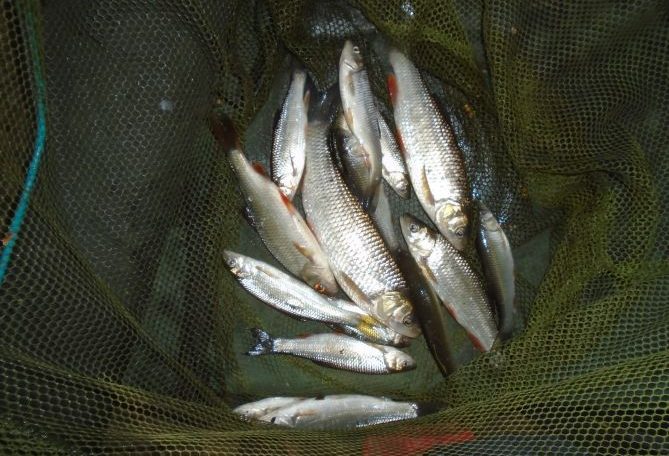
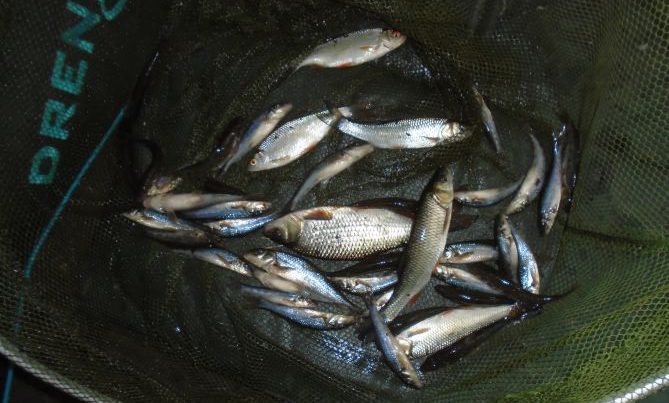
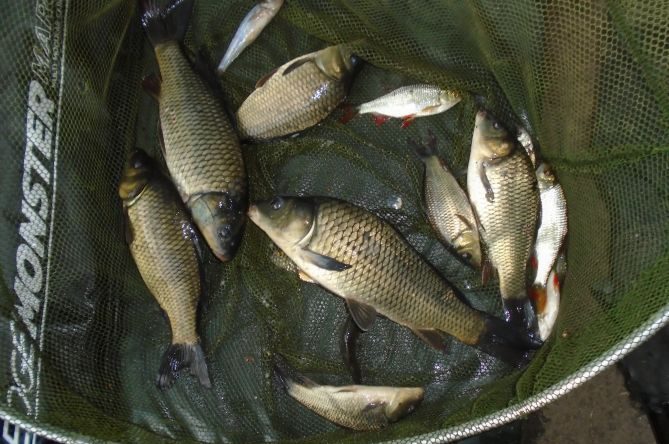
The rate that these carp are growing at will see them giving a better acount of themselves later in the year. Some of them have already migrated downstream to my other local pond at Allsmoor, as I am catching them there now. As it was, the net below was taken in under two hours.


google.com, pub-4724135273945847, DIRECT, f08c47fec0942fa0